This is a case study to accompany Banking on Climate Chaos: Fossil Fuel Finance Report 2025, produced in collaboration with Justiça Ambiental (JA!)/Friends of the Earth Mozambique, and BankTrack.
In 2010, a vast quantity of gas was discovered off the coast of northern Mozambique, in Cabo Delgado province, leading to an influx of large international corporations. The LNG industry in Cabo Delgado is currently made up of four projects to extract and liquefy gas, mainly for export: Eni and ExxonMobil lead work on Coral South FLNG, Coral North FLNG, and Rovuma LNG; and TotalEnergies leads work on Mozambique LNG.
Coral South FLNG, a floating processing plant anchored offshore, started operating in June 2022. Mozambique LNG began construction work in 2019, but after a violent insurgent attack on Palma Town in March 2021, TotalEnergies declared force majeure and the project was on hold for more than four years. In October 2025, TotalEnergies announced that it would lift force majeure, despite increasingly dangerous conditions, and depending on the Mozambican government agreeing to an updated budget and schedule. The company claims the costs for the delays amount to USD 4.5 billion. The Final Investment Decision (FID) for Rovuma LNG has been delayed because of ongoing regional violence but the project has been progressing with engineering design and construction. Coral North FLNG, a copy of Coral South FLNG signed FID in October 2025.
Despite the delays in these projects, the impact on local communities is devastating, and the impacts on regional and global ecologies and the environment could be severe.
Video Disclaimer: This video was made in 2023. Since then, the LNG industry in Mozambique has added a fourth project, Coral North FLNG. While most displaced families were relocated to the village of Quitunda, some were relocated to other villages and at least 8 communities have been affected amid persistent issues with compensation. Call to Action: Tell banks to drop the Mozambique LNG project and steer clear of the Rovuma LNG and Coral North FLNG projects. More testimonies can be found here and here.
Mozambique LNG and Rovuma LNG share land use rights to a site on the Afungi Peninsula, on the south of Palma Bay. The companies are planning to build onshore LNG infrastructure, marine facilities, and supporting infrastructure, including housing. Palma Bay, an important local source of food and natural resources, will be dredged and developed to accommodate increased marine traffic, including 300m-long LNG carriers.
Several communities were required to relocate from the area to make way for the site while others have been affected through losing their lands and access to the coast, sea and fishing grounds. Many of the families who lost their homes and lands remain with unresolved grievances. Since November 2024, affected communities have taken a stronger stance, courageously protesting until TotalEnergies began negotiations again. However, tensions remain high, and many resettled families now face daily struggles for food and water.
There are families who signed agreements with the company in 2019 but who have still not received compensation or replacement fields, so agreements do not indicate resolution. We are also concerned that more lands in more communities will be affected. The company states it is still seeking replacement lands for resettled communities, and in addition, as supporting industries establish around the gas site, even more lands will be targeted. Communities must be treated fairly and compensation must be enough not only for material losses, but also for the long term loss of access to natural resources.” – Kete Mirela Fumo, Justiça Ambiental!
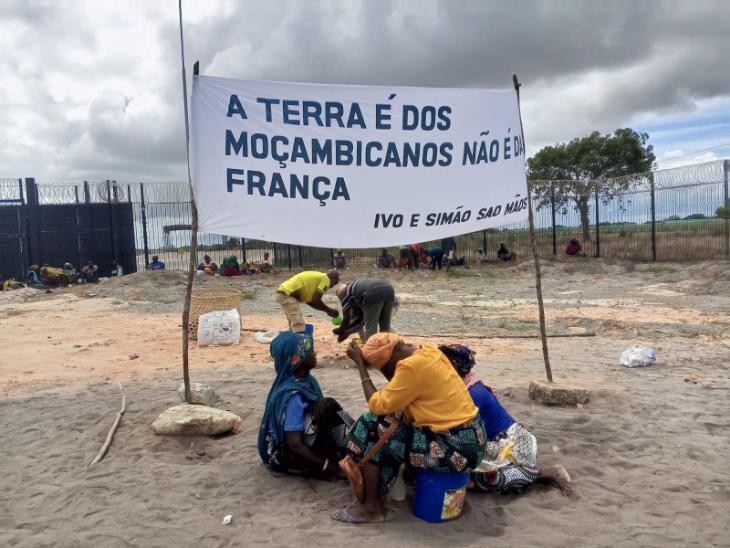
Gas affected communities face these dire circumstances amid ongoing regional insurgency. Insurgents have carried out brutal attacks, deliberately killing civilians, looting homes and burning villages, forcing over one million people to become internal refugees. More than 600,000 people remain displaced, unable to return home. Many of those displaced by the gas projects now find themselves in refugee centres as a direct result of the ongoing conflict that analysts believe to be driven by poverty, unemployment, despair and social, economic and political exclusion.
Gas development has resulted in worsened local living conditions, and people do not believe that they will benefit from the natural resources of their province. In March 2025, an analyst warned that resuming work on the gas projects could fuel the sense of discontent that encourages recruitment into the insurgency. While the drivers of the insurgency remain unresolved, the region has become heavily militarised, with military presence concentrated around the gas projects. The new security arrangements for the Afungi gas complex, introduced in 2025, prioritise protection of the gas projects, completely isolating the operations and concentrating troops within the site, while leaving nearby communities vulnerable to attacks.
Instead of creating safety for local people, public security forces have been accused of violence against civilians, including sexual violence against women and girls. Accusations also include those levelled against a Joint Task Force (JTF) that was set up to “ensure the security of Mozambique LNG project activities” and for which TotalEnergies was directly providing food equipment, accommodation, and individual bonuses. As reported in the press, the JTF is allegedly linked to a massacre of civilians committed in 2021 in which Mozambican troops raped women and imprisoned and tortured 180 to 250 men in windowless, metal shipping containers near the entrance of the Mozambique LNG site for three months. Only 26 of the prisoners are estimated to have survived. Subsequent journalistic investigations found that TotalEnergies was aware that JTF troops were “accused of raping, abducting and killing civilians.” The incidents reported have resulted in international scrutiny of the project.
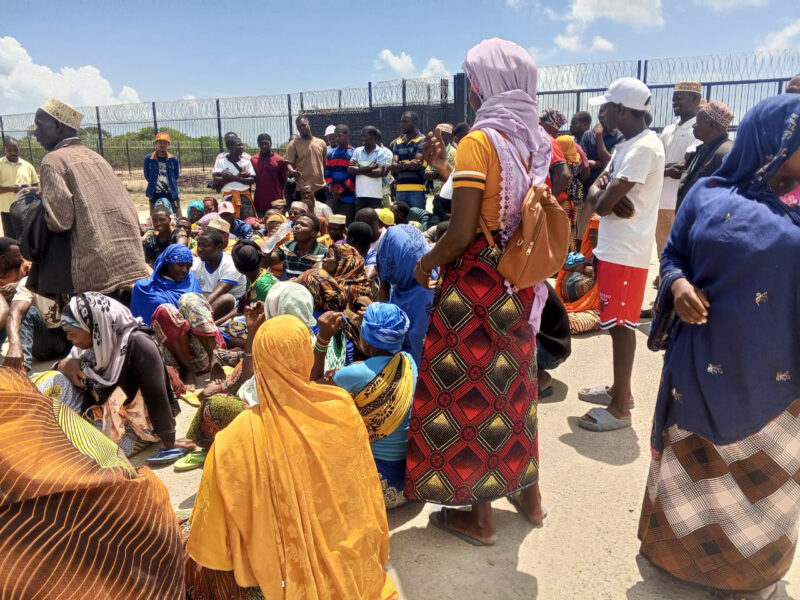
In June 2025, local chiefs and Mozambique and international NGOs formally requested the Office of the UN High Commissioner for Human Rights (OHCHR) to establish an independent investigation into severe human rights violations allegedly committed in 2021 by Mozambican security forces, including members of the Joint Task Force protecting TotalEnergies’ Mozambique LNG project in Cabo Delgado Province. An independent international investigation is considered the only way to ensure a fair, impartial, safe and victim-centred process.
The climate and environmental impacts of the gas projects could be severe, but are considered to be understated and under-represented according to an independent assessment commissioned by Fair Finance Southern Africa and JA!. For example, the environmental impact assessments for the projects do not properly consider the risks of gas and condensate leakage, which is toxic and could easily spread on ocean currents and affect communities along the coastline. While the region is ecologically valuable, it is not well researched, making it impossible to assess how gas exploitation could impact local or regional species and biodiversity. The burning of the LNG produced by the four projects would contribute significantly to climate change – taking up at least 7.5% of the remaining global carbon budget to stay under the 1.5 degrees Celsius threshold.

The financial institutions involved in the Mozambique LNG project have been advised of the severe risks associated with it, and as yet none have indicated that they will withdraw their support for the project. Among the banks that signed loan agreements with the Mozambique LNG project are: JPMorgan Chase, Standard Chartered, Société Générale, Crédit Agricole, Mizuho Financial, SMBC Group, Mitsubishi UFJ Financial and ICBC. Financial institutions have also been advised of the risks associated with the Coral North FLNG, and while five banks have indicated that they will not support the project, Eni has indicated positive feedback from financiers and signed the Final Investment Decision in October 2025. Financial institutions have also previously been alerted in relation to Rovuma LNG.
Learn more at stopmozgas.org